Reviewing Egg Cited for Easter SVG for Real Stitching
As a designer who spends half my life digitizing and the other half stitching, I have learned to look past the glossy preview images. When I downloaded Egg Cited for Easter,Easter SVG, I was not just looking for a cute holiday graphic. I was evaluating whether this asset could hold up under the needle, survive a wash cycle, and actually sell in a competitive handmade market. This review breaks down how this specific design performs when moved from a digital screen to actual fabric.
First Impressions and Visual Personality
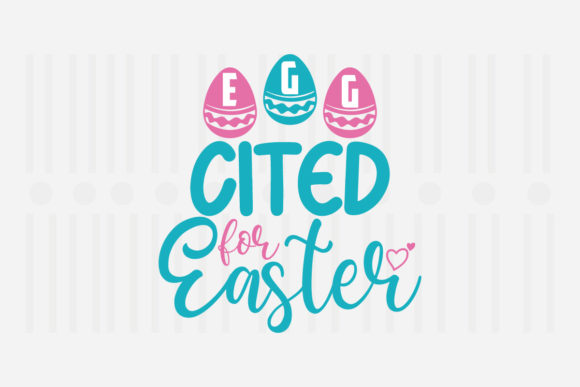
The phrase "Egg Cited" is a playful pun that immediately sets a lighthearted tone. For holiday embroidery, humor often sells better than traditional religious or floral motifs because it appeals to a broader demographic, including younger parents and gift buyers looking for something witty. The visual layout of this SVG appears clean and balanced. In the world of Crafts and Graphics, simplicity is often a virtue. Complex illustrations can become muddy when stitched, but a strong typographic focus with simple iconography tends to translate well into thread.
The mood is cheerful and energetic. It does not try to be overly intricate, which is a good sign for production efficiency. When I visualize this on a product, I see it working best as a central chest piece on apparel or a focal point on home goods. The design relies on clear shapes, which suggests it will maintain its integrity even at smaller sizes, provided the details are not too fine.
Real-World Application: The Tote Bag Test
To truly test a design, you must imagine it on a specific product. I recently prepared a batch of canvas tote bags for a spring craft fair. I considered using Egg Cited for Easter,Easter SVG for a limited-run item. Canvas is a forgiving fabric, but it has a distinct texture. A design with too much density can pucker the material, while a design with too little coverage might look sparse.
Because this file is described as ready to print and available in high-resolution formats like EPS and SVG at 300dpi, it offers flexibility. However, for embroidery, we need to consider how these vector paths translate to stitch types. If I were digitizing this from the SVG source, I would likely use a combination of satin stitch for the text to give it a smooth, raised appearance, and perhaps a fill stitch for any egg graphics to ensure solid coverage. The ease of color change mentioned in the product description is crucial here. I could easily swap pastel yellows for vibrant oranges depending on the thread inventory I had on hand, allowing for quick customization without re-digitizing.
Performance on Different Fabrics
Not all fabrics behave the same way. When applying this design to a cotton sweatshirt, the loft of the fleece requires careful attention to stitch density. If the design is too dense, it will create a hard patch that feels uncomfortable against the skin. If it is too light, the fabric underneath will show through, ruining the legibility of the pun. For a sweatshirt embroidery project, I would recommend using a cut-away stabilizer to prevent distortion over time.
On the other hand, using this on a baby onesie requires a different approach. Babies have sensitive skin, so the back of the embroidery must be soft. I would opt for a lighter density and possibly use a running stitch for finer details to reduce bulk. The "Egg Cited" theme is perfect for baby embroidery, as it fits the nursery aesthetic without being overly gendered. However, one must be cautious with small lettering on stretchy knits. If the letters are too thin, they may break or distort during wear. Always test on scrap fabric first to gauge how the specific machine handles the curve of the letters.
Commercial Viability for Etsy Sellers
For Etsy sellers and small shop owners, time is money. A design that is "ready to print" or easy to convert saves hours of work. While this product is listed as an SVG and EPS, which are primarily vector graphics for cutting or printing, many modern embroidery software programs can import SVGs to auto-digitize or serve as a precise underlay guide. This versatility makes it a valuable asset for a craft business that offers both printed and embroidered goods.
Imagine offering a coordinated set: a printed mug with the SVG and an embroidered apron with the stitched version. This cross-promotion increases the perceived value of your handmade product. The ability to change colors easily means you can offer customization options, such as matching the thread to the customer’s kitchen decor. Customization drives higher price points and customer satisfaction. However, always confirm the licensing terms. Just because a file is included does not automatically grant commercial rights for resale of the digital file itself, though finished physical items are usually permissible. Always read the specific license attached to the download.
Technical Considerations and Pitfalls
There are areas where this design requires caution. If you plan to use it on dark fabrics, you must ensure there is a proper underlay stitch to prevent the background color from peeking through the thread. Contrast is key. A yellow egg on a white shirt might vanish, so testing color combinations is essential. I recommend creating black and white mockups to check the silhouette and readability before committing to thread.
Additionally, be mindful of curved surfaces like caps. Embroidering on a cap requires a specialized hoop and often a stiffer stabilizer. The text in "Egg Cited" needs to be arched correctly to follow the crown of the hat. If the SVG is flat, you may need to adjust the layout in your digitizing software to compensate for the curvature. Dense stitch areas on a cap can cause puckering if the tension is not perfectly calibrated.
Final Verdict for Designers
Egg Cited for Easter,Easter SVG is a versatile asset that bridges the gap between digital graphics and tangible crafts. Its strength lies in its simplicity and humorous appeal, which translates well into various mediums. For embroidery specifically, it serves as an excellent base for digitizing or as a reference for manual stitching. It fits naturally into categories like holiday embroidery, custom apparel, and personalized gifts.
Before launching a full production run, I advise every designer to stitch out a sample on the exact fabric type you intend to sell. Check the thread tension, inspect the back for loose jumps, and wash the sample to ensure durability. If it holds up, this design can be a reliable staple in your spring collection, offering both charm and commercial potential for your small business.