Reviewing Sister Kitchen SVG for Embroidery Projects
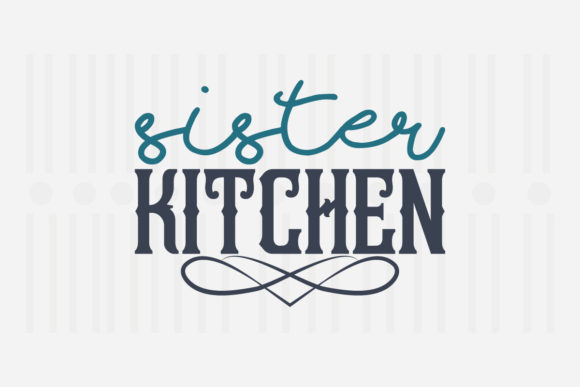
As a designer who spends half my life digitizing and the other half stitching, I have learned that not every graphic translates well to thread. When I first pulled up Sister Kitchen,Kitchen SVG, my immediate reaction was one of cautious optimism. The design promises versatility across t-shirts, posters, and mugs, but my interest lies in how it performs under the needle. For those of us running small shops or crafting personalized gifts, the difference between a digital file that looks good on screen and a finished product that holds up to washing and wear is critical.
First Impressions and Visual Personality
The mood of this piece is warm, domestic, and inviting. It captures that specific blend of humor and pride often found in home-centric decor. Visually, the layout appears balanced, which is essential when we consider the constraints of an embroidery hoop. The theme suggests a natural fit for kitchen towels, aprons, or perhaps a cozy sweatshirt for someone who loves hosting. However, because the source files are provided as EPS and SVG at 300dpi, we are starting with vector-based clarity. This is a significant advantage. Unlike low-resolution JPEGs that pixelate when enlarged, these formats allow us to scale the design without losing edge definition, a crucial factor when preparing a machine embroidery design.
What stands out is the potential for customization. The description notes that the design is 100% color changeable. In the world of Crafts and Graphics, this flexibility is gold. It means we are not locked into a single aesthetic. We can adapt the palette to match brand colors for a boutique or choose soft pastels for a baby shower gift. The ease of changing colors suggests that the underlying structure is likely clean, without unnecessary nodes or complex overlaps that might confuse conversion software.
Real-World Application: The Tote Bag Test
To truly evaluate Sister Kitchen,Kitchen SVG, I imagined a real-life scenario: creating a custom embroidered tote bag for a local farmer’s market vendor. Tote bags are typically made from canvas or heavy cotton, fabrics that have a distinct texture. Here, the design’s line weight becomes paramount. If the lettering or graphical elements are too thin, they may get lost in the weave of the fabric. Conversely, if they are too dense, the fabric might pucker.
Given that this is a quote-based design, the legibility of the text is the primary concern. In a handmade product context, customers expect crisp, readable lettering. I would recommend testing this design on a scrap piece of similar fabric before committing to the final item. Using a stabilizer is non-negotiable here; a cut-away stabilizer would provide the necessary support for the heavier fabric, ensuring the stitches lay flat and the design remains stable after repeated use. The visual appeal of the final tote would depend heavily on thread choice. A matte cotton thread might offer a rustic charm, while a polyester rayo could add a subtle sheen that elevates the perceived value of the item.
Navigating Fabric and Hoop Constraints
While the design is versatile, there are areas where caution is required. Embroidery on stretchy fabrics, such as jersey knits used in t-shirts, demands careful handling. If the stitch density is too high, the fabric will distort, leading to a warped look that undermines professionalism. For custom apparel like sweatshirts or caps, the curvature of the surface adds another layer of complexity. On a cap, for instance, the design must be centered perfectly, and the stitch direction should follow the curve to prevent pulling.
Dark fabrics present their own challenge. If the design includes light-colored elements, they may require an underlay stitch or a backing patch to ensure visibility. This is where the concept of an applique design might come into play. If the original SVG allows for easy separation of elements, one could potentially convert parts of the design into applique, reducing stitch count and adding texture. However, since the file is primarily a graphic quote, relying on satin stitches for borders and fill stitches for larger areas would be the standard approach. It is vital to check whether the design works for both personal and commercial projects by confirming licensing terms, especially if you plan to sell these items as an Etsy seller or at craft fairs.
Enhancing Brand Consistency and Customer Trust
For creative entrepreneurs, consistency is key to building brand recognition. Sister Kitchen,Kitchen SVG offers a reliable base that can be adapted across various products. Whether it is a holiday embroidery project for Christmas gifts or a year-round small shop product, the design’s adaptability supports a cohesive brand image. When customers see consistent quality across different items—be it a pillow cover, a tea towel, or a patch—they develop trust in the maker.
The professional presentation of the design also impacts buyer engagement. A well-executed embroidery project signals attention to detail. By using high-quality thread colors and ensuring proper tension, we elevate the perceived value of the item. This is particularly important for personalized gift markets, where the emotional value is tied to the craftsmanship. A sloppy stitch job can ruin the sentiment, while a crisp, clean execution enhances it.
Practical Notes for the Embroidery Designer
Before diving into production, here are some practical steps to ensure success with this design:
- Test on Scrap Fabric: Always run a test stitch-out on the actual fabric type you intend to use. This reveals issues with tension, density, or registration.
- Check Thread Contrast: Ensure there is sufficient contrast between the thread and the fabric background. Use black and white mockups to verify readability.
- Review Stitch Density: If converting the SVG to an embroidery file manually, pay close attention to stitch density. Too many stitches in a small area can cause thread breaks or fabric puckering.
- Confirm Hoop Size: Make sure the scaled design fits comfortably within your machine’s hoop size, leaving enough margin for stabilization.
- Inspect Small Details: Zoom in on the vector file to check for tiny, isolated elements that might not stitch out well. Simplify if necessary.
- Verify Licensing: Since this is a digital asset, confirm the license terms for commercial use. Some licenses allow selling physical items but restrict selling the digital file itself.
In conclusion, Sister Kitchen,Kitchen SVG is a promising asset for designers and makers. Its strength lies in its simplicity and adaptability. By approaching it with a designer’s eye and a stitcher’s practicality, we can transform a simple graphic into a high-quality, tangible product that resonates with customers. Whether you are creating a tote bag design for a local business or a baby embroidery piece for a friend, this design offers a solid foundation for creative expression.